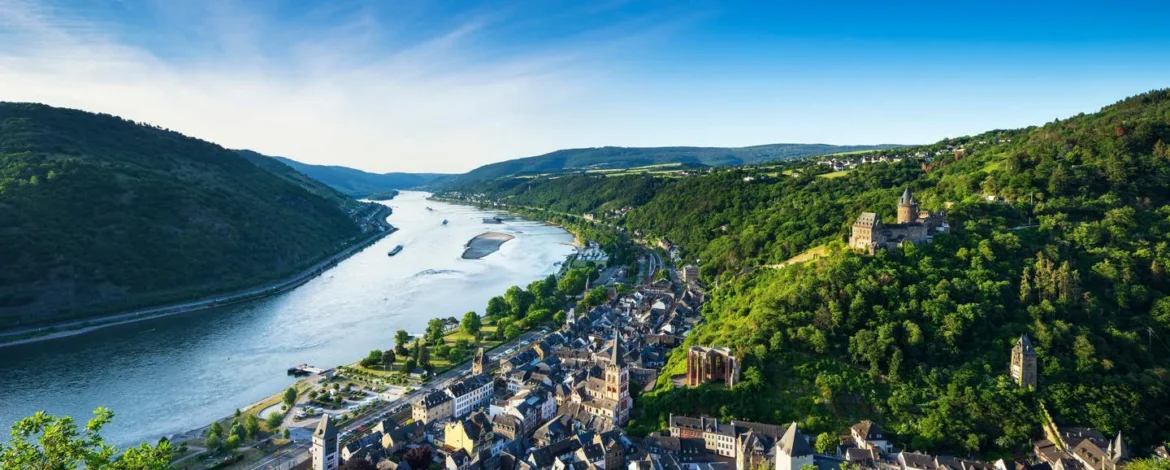
The Mittelrheintal, or Middle Rhine Valley, is a picturesque and historically significant region in Germany, known for its stunning landscapes, charming towns, and rich cultural heritage. Here are some key highlights:
Geography and Landscape
– Location The Mittelrheintal stretches between the cities of Bingen and Bonn, covering around 65 kilometers (about 40 miles) along the Rhine River.
– Scenery: The valley is characterized by steep, vineyard-covered hills, dramatic cliffs, and numerous castles perched on hilltops, creating a postcard-perfect setting.
– UNESCO World Heritage Site: In 2002, the Upper Middle Rhine Valley was designated a UNESCO World Heritage Site due to its historical significance and exceptional natural beauty.
Historical Significance
– Castles and Fortresses: The region is dotted with more than 40 castles, fortresses, and ruins, many of which date back to the medieval period. Notable examples include Marksburg Castle, Rheinstein Castle, and Stolzenfels Castle.
– Lorelei Rock: One of the most famous natural landmarks in the valley is the Lorelei Rock, a steep rock formation associated with the legend of the Lorelei, a siren who lured sailors to their doom with her singing.
– Trade and Transport: Historically, the Rhine River was a vital trade route, and the Middle Rhine Valley played a crucial role in the commerce and movement of goods throughout Europe.
Culture and Traditions
– Wine Production: The Mittelrheintal is one of Germany’s renowned wine regions, particularly known for its Riesling wines. The steep vineyards and unique microclimate contribute to the distinctive quality of the wines produced here.
– Festivals and Events: The valley hosts numerous festivals, including wine festivals, medieval fairs, and the Rhine in Flames (Rhein in Flammen) event, where fireworks illuminate the river against the backdrop of the castles.
Tourism and Activities
– Cruises and Boat Tours: River cruises are a popular way to experience the Middle Rhine Valley, offering stunning views of the landscape and castles from the water.
– Hiking and Cycling: The Rheinsteig trail and other paths provide excellent opportunities for hiking and cycling, allowing visitors to explore the region’s natural beauty and historic sites.
– Historic Towns: Towns such as Bacharach, Oberwesel, and St. Goarshausen are known for their well-preserved medieval architecture, charming streets, and inviting wine taverns.
Notable Towns
– Bacharach: Known for its timber-framed houses, medieval walls, and the Post Tower.
– Rüdesheim: Famous for the Drosselgasse, a narrow street lined with wine taverns, as well as the Niederwalddenkmal monument.
– Koblenz: Located at the confluence of the Rhine and Moselle rivers, Koblenz is home to the Deutsches Eck (German Corner) and the Ehrenbreitstein Fortress.
The Mittelrheintal offers a blend of natural beauty, historical depth, and cultural richness, making it a captivating destination for travelers interested in history, wine, and scenic landscapes.